What are the advantages of GAG over standard PET? This question matters as brands seek clearer, tougher, and more efficient thermoformed packaging. GAG usually combines PETG outer layers with an APET core. That structure can improve impact resistance, edge quality, and forming performance.
Smithers’ global packaging research identifies lightweighting, material efficiency, and recyclability as major forces shaping plastic packaging. PlasticsEurope also reports that packaging remains the largest plastics-use sector in Europe. These findings provide useful context, but they do not prove that GAG is always the better choice. Application details matter.
Packaging strategist Patrick Thomas has stated, “Plastics are not the problem; the way we use plastics is the problem.” His point applies directly here. GAG may offer smoother thermoforming, stronger corners, excellent transparency, and fewer visible whitening marks around deep draws. On a production line, that can mean cleaner trays, fewer rejected parts, and more consistent shapes.
There is a limitation.
GAG’s multilayer construction may complicate recycling where local systems accept only specific PET streams. Cost, thickness, sealing requirements, and end-of-life infrastructure must be checked before changing materials. A clear tray that forms beautifully can still create problems after disposal.
This guide examines seven practical advantages of GAG over standard PET, using manufacturing performance, product protection, appearance, and sustainability evidence. The comparison remains cautious. Better processing does not automatically mean better environmental performance.
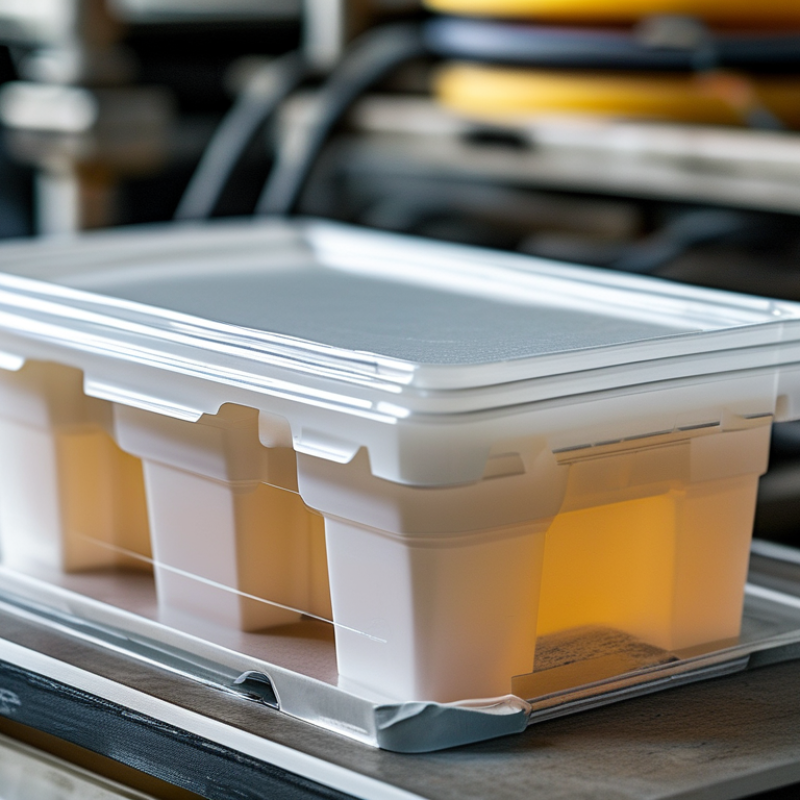
What Is GAG and How Does It Differ From Standard PET?
GAG usually refers to a three-layer PET sheet: glycol-modified PET on the outside and standard amorphous PET in the core. Standard PET is often made from one PET formulation, although its exact structure can vary by grade and process. This difference affects how the sheet bends, forms, seals, and protects products.
In practical thermoforming, GAG can form complex shapes with less whitening and cracking. Its outer layers usually improve clarity, surface appearance, and heat-sealing performance. The PET core adds stiffness and dimensional stability. GAG may also offer better impact resistance, helping trays withstand handling during transport. Its balanced structure can support thinner designs, but thinner does not always mean better. Engineers must check rigidity, tooling conditions, and drop performance.
Standard PET can remain a strong choice for simple shapes, lower processing demands, or established recycling systems. GAG may require more careful temperature control because each layer responds differently to heat. Compatibility with local recycling facilities also needs verification, especially when additives, inks, or attached materials are present. That detail matters.
Material tests should include forming trials, seal-strength checks, haze measurements, and product-specific storage conditions. Results can change with thickness and equipment. A laboratory sample may behave perfectly, while a high-speed production line exposes unexpected distortion. Specifications should therefore be confirmed with measured data, not appearance alone.
How GAG’s Layered Structure Improves Barrier Performance
GAG’s layered structure creates a more reliable barrier than standard PET. The outer glass layers provide stiffness and protect the thin aluminum core from scratches, bending, and chemical exposure. Aluminum blocks oxygen, moisture, and light. The inner glass layer then supports sealing and reduces direct contact with the barrier metal. Three functional layers, not one.
Industry test reports using ASTM D3985 and ASTM F1249 often place standard PET near 1–10 cc/m²/day for oxygen transmission, depending on thickness and humidity. Well-designed GAG structures can reach oxygen and water-vapor transmission below 0.01 cc/m²/day and 0.01 g/m²/day, respectively. Actual results vary.
That difference matters in oxygen-sensitive packaging and electronic protection. Less moisture ingress can slow oxidation, preserve flavor, and reduce performance loss. The aluminum layer also gives strong light shielding, while glass improves dimensional stability during storage and transport. It feels substantial.
Still, GAG is not automatically perfect. Glass adds weight, and poor edge sealing can weaken the entire barrier. This is where many comparisons become too optimistic. Test data should include flexing, temperature cycling, and high-humidity exposure, not only laboratory measurements. ASTM results are useful, but field performance may tell a less comfortable story.
7 Best Advantages of GAG Over Standard PET? — How GAG’s Layered Structure Improves Barrier Performance
GAG is commonly constructed as a three-layer PETG/A-PET/PETG sheet, while standard PET is typically a single-layer structure. The layered design creates two material interfaces, adds dedicated outer layers for forming and sealing, and increases the number of diffusion path segments. These structural features can help maintain barrier consistency after thermoforming, although actual oxygen and moisture transmission rates depend on thickness, temperature, humidity, processing conditions, and the final package design.
Representative structural comparison; values describe nominal layer architecture rather than brand-specific laboratory test results.
Seven Key Advantages of GAG Over Standard PET
Seven Key Advantages of GAG Over Standard PET
GAG, commonly understood as glycol-modified PET, offers easier thermoforming than standard PET. Its lower forming temperature can shorten heating cycles and reduce energy demand. It also forms complex shapes with less whitening, cracking, or edge stress. That matters when trays include deep cavities or tight corners. Production feels more forgiving.
The material provides strong optical clarity, helping users inspect products through transparent packaging. Its improved impact resistance can reduce breakage during handling, transport, and shelf loading. GAG also supports smoother trimming, which may improve edge quality and reduce small production defects. In many applications, it delivers a useful balance between stiffness and toughness. This balance is practical.
GAG can provide better dimensional stability after forming, especially when the process is carefully controlled. It may also offer reliable sealing and printing performance when the surface is properly treated. Standard PET still has advantages in some high-temperature or highly rigid applications, so material selection should follow testing rather than habit. Actual results depend on thickness, forming temperature, mold design, and cooling speed. A rushed trial can mislead. Teams should verify clarity, drop resistance, seal strength, and recyclability within their specific process.
Where GAG Performs Best in Packaging Applications
7 Best Advantages of GAG Over Standard PET?
Where GAG Performs Best in Packaging Applications
GAG, a three-layer structure with PETG skins and a PET core, performs best in rigid packaging that needs shape, clarity, and impact resistance. Its softer outer layers support smoother thermoforming, especially around deep corners and sharp details. This makes GAG suitable for cosmetic trays, protective electronics packaging, medical-device packs, and premium retail displays.
It also offers strong visual performance. High transparency helps products remain visible, while the surface accepts printing and labels with fewer appearance defects. In practical production, GAG can reduce cracking during forming and create cleaner edges than standard PET. It is not perfect, though. Excessive forming temperatures may still cause whitening, distortion, or uneven wall thickness.
Packaging represents about 40% of global plastic use, according to the OECD’s Global Plastics Outlook 2022. That figure makes material efficiency important, not optional. GAG can support lightweight designs because its toughness allows thinner formed sections in suitable applications. However, converters must check local recycling guidance carefully. The OECD reported that only about 9% of global plastic waste was recycled in 2019. PETG-rich layers may complicate recycling where sorting systems are designed mainly for conventional PET. Testing, clear labeling, and controlled material specifications remain essential.
Important Factors When Choosing GAG Instead of Standard PET
7 Best Advantages of GAG Over Standard PET
When choosing GAG instead of standard PET, compare the full application, not appearance alone. GAG sheets commonly combine PETG outer layers with a PET core. This structure can offer seven practical advantages: improved impact resistance, easier thermoforming, stronger folding performance, clearer presentation, better surface durability, reduced forming stress, and broader design flexibility. It may also support complex shapes with fewer visible whitening marks.
The choice depends on temperature, thickness, tooling, and end use. GAG can form at lower temperatures than standard PET in some processes, helping reduce heat exposure and cycle pressure. Its outer layers may improve printing or surface protection. However, it is not automatically better. Some designs may lose stiffness, increase material cost, or require different recycling instructions. Do not trust appearance alone. Request technical data, run forming trials, and check performance after stacking, cooling, and transport. Testing should include impact, haze, seal strength, and dimensional stability.
Tips:
Confirm the layer structure with the supplier. Measure actual forming temperatures. Inspect corners under bright light. Compare scrap rates, not only sheet prices. Recycling compatibility can vary by local facilities, so verify it before making claims. A small pilot run often reveals problems that laboratory samples hide.
Conclusion
GAG is a multilayer packaging material that combines a central PET layer with PETG-based outer layers, while standard PET is generally produced as a more uniform single-material structure. This layered design can balance stiffness, clarity, toughness, and processing performance. When asking “what are the advantages of GAG over standard PET,” the key benefits include improved thermoformability, better resistance to cracking and stress whitening, strong visual appeal, reliable dimensional stability, and easier production of complex shapes. Its outer layers can also enhance surface protection and help create a more effective barrier structure when properly designed for the intended application.
GAG performs especially well in transparent trays, folded packaging, protective inserts, and products requiring attractive presentation with dependable durability. It may also reduce forming-related defects and support more efficient manufacturing. However, the best choice depends on factors such as required barrier performance, thickness, temperature resistance, recyclability goals, equipment compatibility, and total cost. Standard PET may remain preferable where higher rigidity, established recycling streams, or specific heat-performance requirements are priorities.

 Benchmark Plastic