Choosing the right adhesive for PET sheets is not simply a matter of selecting the strongest product. PET is smooth, chemically resistant, and often flexible, so weak preparation can defeat an excellent adhesive. This guide examines how to bond PET sheets with industrial adhesives, focusing on acrylic pressure-sensitive adhesives, two-part epoxies, polyurethane systems, and specialty primers. Each option behaves differently under heat, moisture, vibration, and repeated bending.
Steven Abbott, a respected adhesion scientist and author of Adhesion Science, explains, “Adhesion is not a property of a material; it is a property of a system.” That principle matters on the factory floor. A clean PET surface may still contain fingerprints, release agents, or microscopic dust. A worker may wipe it once and assume the job is ready. Sometimes, that is not enough. Plasma or corona treatment can improve surface energy, while a compatible primer may increase long-term durability. Testing remains essential.
The best choice depends on load direction, cure time, service temperature, and production speed. A flexible acrylic may suit laminated displays, while an epoxy can support rigid assemblies with higher structural demands. Polyurethane can absorb movement, but it may require careful moisture control. Small trials reveal problems early. Peel the bonded sample after conditioning. Inspect the failure surface, not only the bond strength. Results can vary, and no adhesive wins every application. This practical comparison will help engineers narrow the field, avoid costly assumptions, and select a PET bonding method with measurable confidence.
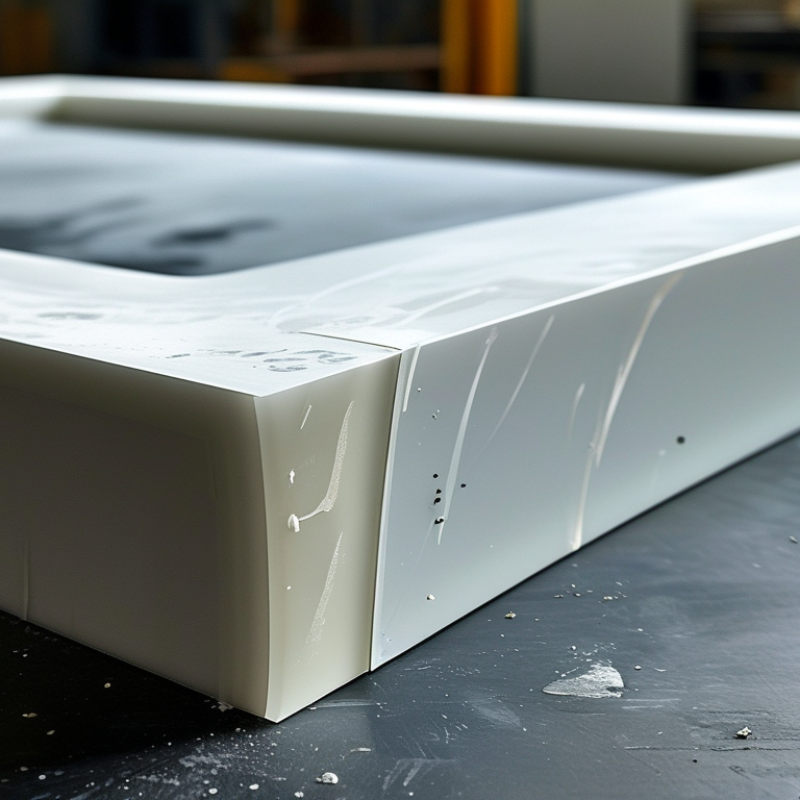
What Makes PET Sheets Difficult to Bond?
PET sheets look clean, but they can be surprisingly difficult to bond.
Their smooth surface offers few microscopic features for an adhesive to grip. PET also has relatively low surface energy, which can limit wetting. Processing additives, dust, and handling oils make this problem worse.
Temperature changes create another challenge. PET expands and contracts while the bonded joint may remain rigid. A hard adhesive can crack under repeated bending or impact. Flexible polyurethane adhesives often suit moving joints, while modified acrylics can provide strong initial adhesion. Epoxies may work for rigid assemblies, but they need careful surface preparation and curing control. Solvent-based products are not always suitable and may damage the sheet.
Tips: Clean PET with a compatible lint-free wipe, then allow it to dry fully. Light abrasion may improve adhesion, but excessive sanding can weaken the surface. Use a primer only after compatibility testing. I would not trust a quick hand-pull test alone. Check lap shear, peel strength, temperature resistance, and aging performance. Small trial panels can reveal failures caused by moisture, edge lifting, or adhesive shrinkage. One often-missed detail is joint design. Keep the adhesive layer consistent, avoid sharp stress points, and allow enough curing time before loading the assembly.
Key Properties to Consider When Choosing an Industrial Adhesive
Top Industrial Adhesives for Bonding PET Sheets?
Choosing an adhesive for PET sheets requires more than strong initial tack. PET has a smooth, relatively low-energy surface, so poor wetting can create weak edges. Surface cleaning, light abrasion, or a suitable primer may improve contact. Test the actual PET grade, because coatings and recycled content can change adhesion.
Flexibility is essential when sheets bend, vibrate, or experience thermal movement. A rigid adhesive may hold during inspection but crack after repeated cycling. Evaluate peel strength, shear strength, impact resistance, and elongation. In production trials, watch the bond line after heat and humidity exposure. It should remain continuous, without whitening, bubbles, or lifted corners.
Cure behavior also affects industrial reliability. Match the adhesive’s working time with your assembly speed and fixture method. Fast curing sounds efficient, but it can trap air under large sheets. Consider temperature resistance, moisture tolerance, chemical exposure, and optical clarity when appearance matters. Low odor and low outgassing may be important inside enclosed equipment.
Small details matter.
Clean tools, controlled pressure, and consistent adhesive thickness can improve results. I have seen a strong laboratory bond fail because operators applied uneven pressure. That mistake is easy to overlook. Validate performance with production-sized samples, not only small test coupons. A useful selection process compares fresh bonds with aged, flexed, and heat-exposed specimens.
Top Adhesive Types for Bonding PET Sheets
Top Industrial Adhesives for Bonding PET Sheets
Choosing the right adhesive type is critical when bonding PET sheets in industrial assemblies. PET has a smooth, low-energy surface, so weak preparation often causes early failure. Two-part epoxy adhesives provide high strength and good resistance to heat, moisture, and chemicals. They suit rigid joints, but their cured layer may become too brittle for flexing sheets.
Polyurethane adhesives create a more flexible bond and absorb vibration well. They work effectively when PET joins metal, fabric, or painted surfaces. Acrylic adhesives offer fast bonding and strong impact resistance, while some formulations provide better optical clarity. Cyanoacrylate can bond small PET parts quickly, but it may become brittle and leave visible whitening. It is not always ideal for large sheets.
Tips: Clean the PET with a compatible solvent and a lint-free cloth. Avoid aggressive rubbing, which can scratch the surface. Test adhesion after full curing, not immediately. Surface treatment, such as corona or plasma treatment, may improve reliability. Keep the bond line even. Too much adhesive can reduce strength.
In practical production, adhesive selection should follow the joint’s temperature, load, peel force, and movement. A rigid epoxy may fail where a flexible polyurethane succeeds. That assumption is easy to miss. Cure time also affects assembly speed and handling accuracy. Small trial panels should be tested under real humidity and temperature conditions. Results can vary between PET grades, surface finishes, and manufacturing batches.
Step-by-Step PET Sheet Bonding Process
Bonding PET sheets requires careful surface preparation and controlled adhesive application. In industrial work, I first check the sheet thickness, surface finish, and expected load. A flexible adhesive often suits parts exposed to vibration, while a rigid adhesive may fit stable assemblies. Always review the technical data sheet and confirm compatibility with PET.
I wipe both surfaces with a lint-free cloth and a compatible cleaner, then allow them to dry completely. Heavy contamination ruins adhesion. Light abrasion may improve grip, but excessive sanding can damage the sheet. I apply a thin, even adhesive layer using a measured nozzle or spreader. The parts meet slowly, starting from one edge to reduce trapped air. Firm, even pressure keeps the bond line consistent during curing. Cure time depends on temperature, humidity, adhesive chemistry, and joint thickness. Do not move the sheets too early.
Tips: Test a small sample first. Check peel strength after full curing. Keep the bond line thin, but not starved. Use spacers when precise thickness matters. I once rushed clamping and created a slight wave near the edge. The bond held, but the appearance failed inspection. That mistake showed why visual checks matter. After curing, inspect for bubbles, gaps, squeeze-out, and edge lifting. Record the surface treatment, adhesive amount, pressure, and cure conditions for repeatable production.
How to Test Bond Strength and Ensure Long-Term Performance
Top Industrial Adhesives for Bonding PET Sheets?
Bond strength testing matters more than a supplier’s headline rating. PET sheets can flex, creep, and resist wetting. Surface preparation changes results sharply. Clean the sheet with a compatible solvent, then confirm that no haze or cracking appears. Light abrasion may improve adhesion, but excessive abrasion can weaken thin PET.
Use ASTM D3163 or ISO 4587 for tensile lap-shear testing. Prepare at least five identical specimens. Record average strength, standard deviation, and failure mode. Adhesive failure means the interface separated. Cohesive failure means the adhesive or PET failed internally. Test samples after conditioning at 23°C and 50% relative humidity, following ASTM D618 practices. Then add heat, humidity, and thermal cycling. A 85°C/85% relative humidity exposure can reveal slow degradation, but it should match the product’s real environment. ASTM D1876 can support peel testing where flexible joints are expected.
Tips:
Measure bond-line thickness with spacers. Keep pressure and cure time consistent. Test fresh and aged samples. Check edge lifting under a magnifier. One result is not evidence. I have seen strong initial joints fail after moisture exposure, especially when cleaning was rushed. That uncomfortable result deserves investigation, not dismissal. Report the adhesive type, PET grade, surface treatment, overlap size, curing profile, and test speed. Without those details, published strength data cannot be compared reliably.
FAQS
: Their smooth surface provides few microscopic gripping points. Low surface energy also limits adhesive wetting.
Dust, processing additives, and handling oils can reduce adhesion. Even fingerprints may affect small test panels.
Clean them with a compatible solvent and lint-free wipe. Let the surface dry fully before bonding.
Light abrasion may help. Excessive sanding can weaken thin sheets and create uneven bonding areas.
Flexible polyurethane adhesives suit moving joints. Modified acrylics offer strong initial adhesion. Epoxies fit rigid assemblies.
Prepare at least five identical specimens. Measure lap-shear strength, variation, peel strength, and failure mode.
Test fresh and aged samples. Add heat, humidity, and thermal cycling when they match real service conditions.
Keep the adhesive layer consistent and avoid sharp stress points. Allow full curing before applying loads.
No. It can miss moisture damage, edge lifting, and adhesive shrinkage. One result is not evidence.
Record PET grade, adhesive type, overlap size, surface treatment, cure profile, and test speed. Otherwise, comparisons remain uncertain.
Conclusion
Bonding PET sheets can be challenging because their smooth, low-surface-energy surfaces often resist adhesion, while flexibility, moisture, temperature changes, and chemical exposure can weaken the bond over time. Choosing an industrial adhesive requires careful consideration of surface compatibility, curing speed, flexibility, gap-filling ability, temperature resistance, and long-term durability. Common options include two-part structural adhesives, reactive adhesives, pressure-sensitive systems, and specialized hot-melt formulations, depending on the application and production requirements.
To understand how to bond PET sheets with industrial adhesives, begin by cleaning and drying the surfaces, lightly preparing them if appropriate, and applying the adhesive evenly without contamination or excess. Align and clamp the sheets with consistent pressure during curing, following the adhesive’s recommended conditions. Finally, evaluate bond strength through peel, lap-shear, and environmental-aging tests. Monitoring performance under heat, humidity, chemicals, and repeated stress helps confirm that the selected adhesive will provide reliable, long-term results.

 Benchmark Plastic